
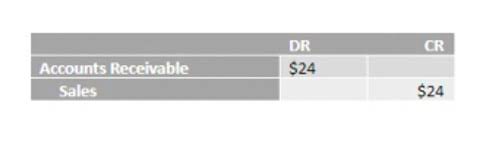
However, https://elpuesto.com.ar/investment-accounting-manager-nuveen-private-funds/ the payment for these services was not received until January. Despite not receiving the payment yet, the consulting firm must still recognize the revenue for December since they have already provided the service during that period. Now that we know the importance of adjusting entries and the steps involved in preparing them – it’s time to take a look at some examples to make it easier to understand. With that in mind, here are some examples of different types of adjusting entries.

Prepaid Expenses: Timing and Impact
Unreported expenses and unaccounted revenue may distort financial statements, violating the revenue recognition principle. Adjusting entries rectifies these discrepancies, ensuring the proper recording of revenue for the relevant time period. Adjustment entries are accounting entries made at the end of an accounting period to record transactions that have occurred but have not yet been recorded.
- Adjusting entries serves as a crucial mechanism for aligning financial statements and records with the accrual basis, thereby ensuring a more accurate representation of a company’s financial position.
- When the cash is paid, an adjusting entry is made to remove the account payable that was recorded together with the accrued expense previously.
- This practice of recognizing bad debts is a normal business practice and is part of the operating expenses of a company.
- This approach provides a more precise and comprehensive view of your financial performance.
Financial Consolidation & Reporting

The correct balance should be the cumulative amount of depreciation from the time that the equipment was acquired through the date of the balance sheet. A review indicates that as of December 31 the accumulated amount of depreciation should be $9,000. Therefore the account Accumulated Depreciation – Equipment will need to have an ending balance of $9,000.
HighRadius Named As A Major Player For Treasury & Risk Management Software By IDC
Prior to producing financial statements, the accountant must search for all such changes that have been omitted. These adjustments are a prerequisite step in the preparation of financial statements. They are physically identical to journal entries recorded for transactions but they occur at a different time and for a different reason. Adjusting entries CARES Act are made at the end of an accounting period post-trial balance, to record unrecognized transactions, and rectify initial recording errors. They align real-time entries with accrual accounting, and involve adjustments such as accrued expenses, revenues, provisions, and deferred revenues. Utilities provide the service (gas, electric, telephone) and then bill for the service they provided based on some type of metering.
- When the goods or services are provided, this account balance is decreased and a revenue account is increased.
- You may recall from Analyzing and Recording Transactions that this is the basis of the time period assumption in accounting.
- Adjustment entries can impact a business’s cash flow by affecting the timing of cash inflows and outflows.
- To avoid this mistake, it is important to record transactions as soon as possible and ensure that they are accurate.
- There are also many non-cash items in accrual accounting for which the value cannot be precisely determined by the cash earned or paid, and estimates need to be made.
- Assets depreciate by some amount every month as soon as it is purchased.
- The software simplifies the task but doesn’t eliminate the need for careful oversight and accuracy.
- This timing ensures the financial documents are accurate and reflect all economic activity.
- These accounting adjusting entries examples show how businesses ensure that their records reflect real financial activity rather than the timing of cash movement.
- This updates the respective accounts so that they accurately reflect the company’s financial position.
- Adjustment entries are an essential aspect of accounting that helps ensure the accuracy and completeness of financial statements.
- This is useful to users needing up-to-date financial data to make decisions about company investment and growth.
- Similarly, if an employee works in December but is paid in January, the salary expense belongs to December’s financial records.
When the cash is received at a later time, an adjusting journal entry is made to record the cash receipt for the receivable account. An adjusting journal entry is usually made at the end of an accounting period to adjusting entries examples recognize an income or expense in the period that it is incurred. It is a result of accrual accounting and follows the matching and revenue recognition principles. Once the adjusting journal entry is recorded, it is posted to the company’s general ledger.
